Milestones

Decades Of Hydrodynamic Innovation

Explore over 30 years of achievement, from America’s Cup breakthroughs to zeroemission naval patents

1995

Genetic Algorithm for Rolla Propellers

2004

RANS on Luna Rossa (America’s Cup AC32 concept)

2013

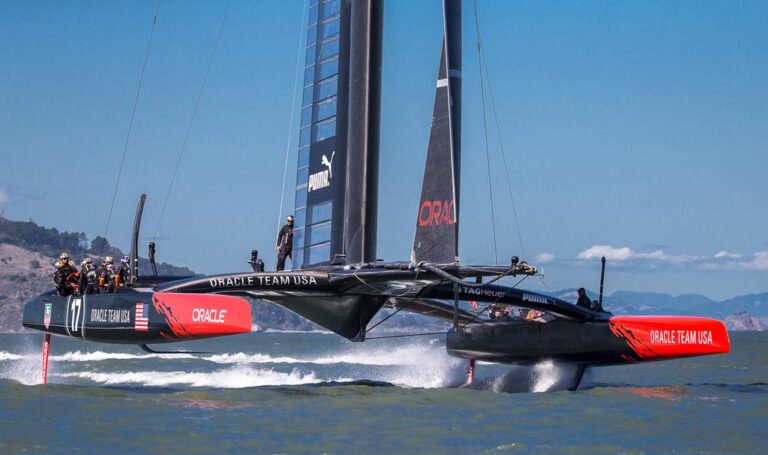
Oracle Catamaran Platform (AC34 Winner)

2018

SeaBubbles Flight Control Concept

2021

AC75 (Luna Rossa); Racebird Foiling Electric Boat; FLY40; Foldable Hydrofoil Patent; Assisted Wind R&D (FEDER)

2024

Hydrogen-Powered Support Vessel for the 37th America’s Cup

1992

CFD & Design of Il Moro di Venezia (America’s Cup LV Winner)

1999/2000

Planing Hull Analysis (Calm Water / Seakeeping)

2010

BMW Oracle Wing Sail (AC33 Winner)

2017

Land Rover BAR Foils; Valencia Office Established

2020

Zero-Emission Wind Propulsion & Virtual Intelligent Design Assistant

2022

Assisted-Propulsion Patent; NepH2AIR (GALATEA Project) with NEPTECH & H2PULSE

2025

Foil-Assisted Luxury Catamaran for Bluegame / Sanlorenzo

1995 — Genetic Algorithm for Rolla Propellers

1995 — Genetic Algorithm-Based Optimisation for High-Performance Propellers

In 1995 Mario Caponnetto applied genetic algorithm methodologies to the optimisation of Rolla propellers, enabling multi-parameter performance exploration and improved efficiency in complex cavitation regimes. This early work helped establish algorithm-assisted hydrodynamic optimisation within the studio.

Partners:

Rolla Propellers

Project Type:

Propeller R&D / Algorithm-Driven Hydrodynamic Optimisation

2004 — RANS on Luna Rossa AC32 Concept

2004 — RANS CFD Development for Luna Rossa (America’s Cup 32 Concept Work)

In 2004, Mario Caponnetto applied early RANS CFD modelling to Luna Rossa’s AC32 design phase, supporting iterative hull-shape refinement and performance prediction. These methods informed later America’s Cup workflows, shaping the studio’s transition to fully digital performance engineering.

2013 — Oracle Catamaran Platform (AC34 Winner)

2013 — CFD and Hydrodynamic Contributions to the Oracle AC34 Foiling Catamaran

In 2013, Mario Caponnetto supported hydrodynamic CFD development for the AC72 foiling platform that won the 34th America’s Cup in San Francisco. Work focused on foil stability, VMG control envelopes and fast convergence cycles — reinforcing the team’s leadership in foil flight optimization.

Partners:

Oracle Team USA

Project Type:

Foiling Catamaran / CFD / Cup Winner Development

2018 — SeaBubbles Flight Control Concept

2018 — Flight-Control Concept Development for SeaBubbles Urban Hydrofoil Mobility

In 2018, Caponnetto-Hueber developed flight-control and hydrodynamic concepts supporting the early SeaBubbles hydrofoil mobility platform. CFD-driven stability mapping and take-off/landing envelope calibration enabled a viable path for clean, silent, low-wake foiling transport in urban environments.

Partners:

SeaBubbles

Project Type:

Urban Foiling Mobility / CFD / Control Strategy

2024 — Hydrogen Support Vessel (HSV BGH)

Hydrogen Foiling Support Vessel for the 37th America’s Cup

In 2024, Caponnetto-Hueber delivered the hydrodynamic and foiling architecture of the hydrogen-powered chase boat required by the 37th America’s Cup Protocol. Using advanced CFD and full-boat optimisation, CH enabled stable foiling at 50 knots, zero-emission operation and a highly efficient hydrogen-propulsion layout, meeting one of the most demanding performance and sustainability challenges ever set for a support vessel.

Partners:

Bluegame / Sanlorenzo Group / America’s Cup

Project Type:

Hydrogen Foiling Vessel / Zero-Emission Support Craft

1992 — Il Moro di Venezia CFD Concept

1992 — CFD & Design Support for Il Moro di Venezia (America’s Cup Louis Vuitton Winner)

In 1992, Mario Caponnetto contributed to the CFD analysis and hydrodynamic optimisation workstreams for Il Moro di Venezia, the Italian challenger that won the Louis Vuitton Cup and reached the America’s Cup Match. The focus was on hull performance evaluation, parametric CFD testing and improving upwind/downwind efficiency across multiple sea state conditions.

Partners:

Il Moro di Venezia / Italian Challenger Syndicate

Project Type:

America’s Cup R&D / CFD / Hydrodynamic

1999/2000 — Planing Hull Analysis

1999/2000 — Planing Hull Hydrodynamic Analysis in Calm Water and Seakeeping Conditions

Between 1999 and 2000, Mario Caponnetto developed advanced hydrodynamic assessment methods for high-speed planing hulls, integrating CFD prediction with empirical validation to refine lift distribution, drag behavior and seakeeping stability. This milestone strengthened the studio’s planing craft methodology.

Partners:

Internal Research

Project Type:

Hydrodynamic Research / High-Speed Hulls

2010 — BMW Oracle Wing Sail (AC33 Winner)

2010 — Hydrodynamic Workstreams Supporting the BMW Oracle Wing Sail Era (AC33)

During the 33rd America’s Cup cycle, Mario Caponnetto contributed to hydrodynamic assessment workstreams aligned with the BMW Oracle wing-sail platform — the configuration that ultimately won the Match. This milestone marked the shift toward aero-hydrodynamic integration in Cup design culture.

Partners:

BMW Oracle Racing

Project Type:

America’s Cup / Aero-Hydro Integration / Performance Engineering

2017 — Land Rover BAR Foils; Valencia Office Established

2017 — Foil Performance Engineering for Land Rover BAR + Valencia Office Opening

Caponnetto-Hueber contributed to foil performance work with Land Rover BAR in the AC35 cycle, applying refined CFD methods to stability, lift efficiency and flight-control envelopes. The Valencia office opened this same year, establishing a strategic Mediterranean R&D base for future Cup and offshore projects.

Partners:

Land Rover BAR

Project Type:

Foils / CFD / America’s Cup R&D

2020 — Zero-Emission Wind Propulsion & Virtual Intelligent Design Assistant

2020 — Zero-Emission Wind Propulsion Research and AI-Assisted Naval Design Tools

In 2020, Caponnetto-Hueber advanced new workflows for wind-assisted propulsion with zero-emission focus, and developed early research around a Virtual Intelligent Design Assistant for faster engineering convergence. These initiatives expanded the studio beyond racing into sustainable maritime mobility.

Partners:

Internal + EU Research Ecosystem

Project Type:

Sustainable Propulsion / AI-Assisted Naval Engineering

2022 — Assisted-Propulsion Patent; NepH2AIR (GALATEA Project)

2022 — Assisted-Propulsion Patent & NepH2AIR Hydrogen Foil Research (GALATEA)

In 2022, the studio secured an assisted-propulsion patent and contributed to NepH2AIR, a hydrogen-based foiling research project with NEPTECH and H2PULSE within the GALATEA framework. This milestone reinforced Caponnetto-Hueber’s role in next-generation, low-impact naval mobility and hybrid propulsion systems.

Partners:

NEPTECH / H2PULSE / GALATEA

Project Type:

Hydrogen Foiling R&D / Patent / Sustainable Propulsion

2025 — BGF45 Foiling Concept

Next-Generation High-Efficiency Foiling Yacht

In 2025, Caponnetto-Hueber supported Bluegame in developing the BGF45, an advanced foiling assisted platform designed for deep efficiency, smooth dynamics and high-performance cruising. Through integrated CFD simulations, covering hull–foil interaction, stability and take-off behaviour, CH helped shape a lightweight, low-drag vessel that sets a new benchmark for future foiling yachts in the 40–50 ft range.

Partners:

Bluegame / Sanlorenzo Group

Project Type:

Foiling Concept Design / Hydrodynamic & CFD Optimization