
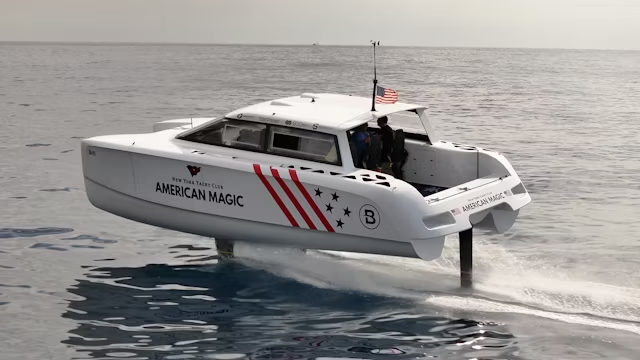
In recent years, foiling vessels have captured the attention of the maritime industry. From high-performance racing yachts to electric water taxis and next-generation ferries, hydrofoils are increasingly seen as a key technology for improving efficiency, comfort, and sustainability at sea.
However, the rapid emergence of foiling vessels in commercial and yacht applications did not happen overnight. It is the result of more than two decades of continuous experimentation, engineering development, and advances in computational fluid dynamics.
Much of this progress has taken place in one of the most demanding laboratories in naval engineering: high-performance racing.
For decades, competitive sailing has served as a powerful accelerator for innovation in naval architecture. The extreme performance requirements of racing yachts force designers to explore new hydrodynamic solutions and push existing technologies beyond conventional limits.
Hydrofoils are a perfect example of this dynamic.
Although the concept of lifting a vessel out of the water using underwater wings dates back more than a century, practical applications remained limited for many years. The challenges were significant: stability, structural loads, control systems, and the complex interaction between water and air around the foils.
In high-level competitions such as the America’s Cup, these challenges became design opportunities.
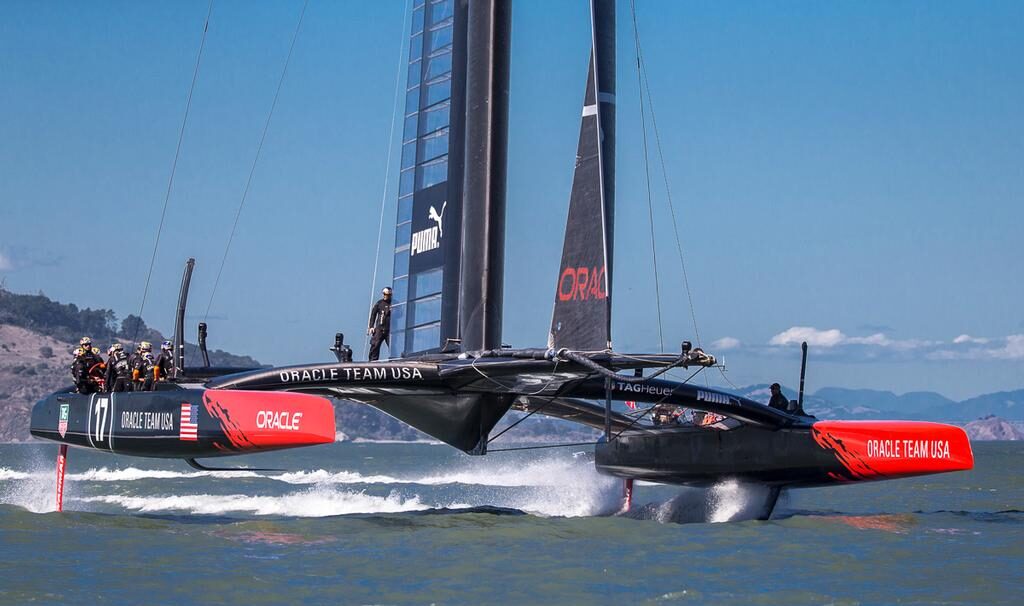
The development of modern foiling yachts required a deep integration of several disciplines: hydrodynamics, aerodynamics, structural engineering, and increasingly, numerical simulation. Designers had to understand how small variations in foil geometry, angle of attack, or flow conditions could dramatically influence lift, drag, and stability.
At the same time, the introduction of advanced computational tools transformed the design process. Instead of relying solely on physical model testing, engineers could simulate complex flow phenomena and evaluate multiple design iterations with unprecedented speed and accuracy.
These capabilities allowed hydrofoil concepts to evolve rapidly, turning experimental ideas into practical solutions.

The expertise developed in high-performance sailing did not remain confined to the racing world. Over time, the knowledge gained through years of foil development began to influence other areas of maritime design.
One of the most important transitions occurred when hydrofoil technology started to be applied to innovative mobility concepts.
Electric propulsion, in particular, created new opportunities for foiling vessels. Electric boats benefit greatly from reduced hydrodynamic resistance, since energy efficiency is directly linked to operational range. Hydrofoils can dramatically reduce drag by lifting the hull out of the water, allowing vessels to travel further while consuming less energy.

This combination of electric propulsion and hydrofoil technology has led to the emergence of a new generation of vessels, including:
· Electric foiling boats
· Water taxis designed for urban waterways
· Experimental mobility platforms exploring new maritime transport models
In these projects, the experience accumulated through racing proved invaluable. Designing a foiling vessel requires much more than simply adding hydrofoils to an existing hull. It demands a holistic approach where the hull, foils, propulsion system, and control systems are developed together as part of an integrated platform.
Lessons learned from high-performance racing environments—where every detail matters—help engineers anticipate challenges and develop robust solutions.
Today, hydrofoil technology is increasingly being explored in broader maritime applications.
In the yacht industry, foiling offers several advantages that go beyond pure speed. When properly designed, hydrofoils can significantly reduce hydrodynamic resistance, allowing vessels to achieve higher performance with lower energy consumption. This improvement can translate into increased autonomy for electric boats or reduced fuel consumption for conventional propulsion systems.
Foiling can also enhance comfort at sea.
By lifting the hull above the water surface, hydrofoils reduce the interaction between the hull and waves. This often results in smoother motion, less spray, and a quieter onboard experience. For certain applications—particularly passenger vessels or high-end yachts—these qualities can be just as important as speed.
Another advantage lies in environmental impact. As the maritime sector increasingly seeks ways to reduce emissions and improve energy efficiency, hydrofoils provide a promising path forward. By minimizing drag, foiling vessels require less power to operate, making them well suited for electric or hybrid propulsion systems.
However, achieving these benefits requires careful design and engineering.
Hydrofoil vessels operate in a complex fluid environment where water and air interact in subtle and sometimes unpredictable ways. Phenomena such as cavitation, ventilation, and unsteady flow structures can significantly affect performance and stability.
Understanding and controlling these effects is essential for reliable foiling operation.
One of the most important lessons learned from two decades of hydrofoil development is that successful foiling vessels cannot be designed through isolated components.
Foils do not operate independently from the rest of the vessel. Their performance depends on the interaction between several key elements:
· Hull geometry
· Foil configuration and positioning
· Propulsion system
· Structural constraints
· Control systems
Computational fluid dynamics plays a central role in this process. Modern CFD tools allow engineers to analyze hydrodynamic behavior, evaluate multiple configurations, and identify performance trade-offs before building prototypes.

At the same time, physical testing and real-world validation remain important. Even with advanced simulation techniques, the complexity of foiling flows means that prototypes and sea trials are crucial steps in the development process.
The combination of numerical simulation, engineering experience, and experimental validation forms the foundation of reliable hydrofoil design.
Looking back over the past twenty years, several key insights emerge from the evolution of hydrofoil technology.
First, small details often have large consequences. Minor variations in foil geometry, surface finish, or flow conditions can have significant effects on performance and stability. Careful design and accurate prediction of hydrodynamic behavior are therefore essential.
Second, the integration of disciplines is critical. Hydrodynamics, structures, propulsion, and control systems must be developed together rather than independently.
Third, computational simulation has become an indispensable tool. Advanced numerical methods allow engineers to explore complex flow phenomena that were once extremely difficult to analyze.
Finally, experience remains a crucial factor. Designing hydrofoil vessels involves a combination of theoretical understanding, practical engineering knowledge, and lessons learned from real-world projects.
Hydrofoil technology is still evolving.
As simulation tools become more powerful and new materials enable lighter, cheaper and stronger structures, foiling vessels will likely expand into new areas of maritime transport. Electric propulsion, autonomous vessels, and innovative mobility concepts may further accelerate this development.
At the same time, the fundamental challenges of hydrodynamics remain. Understanding the complex interaction between water, air, and lifting surfaces continues to be one of the most fascinating problems in naval engineering.

The future of foiling will depend on the ability to combine advanced technology with deep engineering expertise.
After more than two decades of development, hydrofoils are no longer just experimental solutions for racing yachts. They are becoming a key component of the next generation of efficient and innovative maritime vessels.
Subscribe to our newsletter to receive exclusive insights, technical content, and direct access to our latest research paper, Direct Numerical Simulation (DNS) of Flow Around a Hydrofoil: Benchmark Solution. Authored by Dr. Andrew Baglin, Mario Caponnetto, and Prof. Milovan Perić, this work delivers a high-fidelity benchmark that advances the understanding of hydrofoil flow physics and supports more accurate CFD modeling for next-generation marine applications.